The Sticky Stories That Wouldn't Let Go
When Kristen's parents divorced, she went to live with grandparents who loved her fiercely. But her day-to-day life looked nothing like her cousins'. They went to school every morning with two parents cheering them on. Kristen was dropped off at the library to teach herself, with no one telling her what to study or what came next.
Kids don't process a difference like that the way adults do. They don't think "my situation is just different." They fill in the gap themselves, and most kids fill it with a story about what's wrong with them. That's exactly what happened to Kristen. Every comparison became evidence. Every gap became proof.
I'm not enough. I'm behind. I'm missing something the other kids have.
That's a sticky story: a false belief a child forms about themselves from real circumstances. Left alone, it doesn't fade, it grows, until a kid is afraid to try, afraid to raise a hand, afraid to believe they belong. That's what low self-esteem actually looks like day to day.
Then came Honeybee. One afternoon, her cow wrapped her head around Kristen in a hug, and in that single moment, Kristen realized the sticky stories weren't the only stories in her life. She was loved. Her grandparents loved her. Honeybee loved her. That was true too, and it had been the whole time. A shiny story.
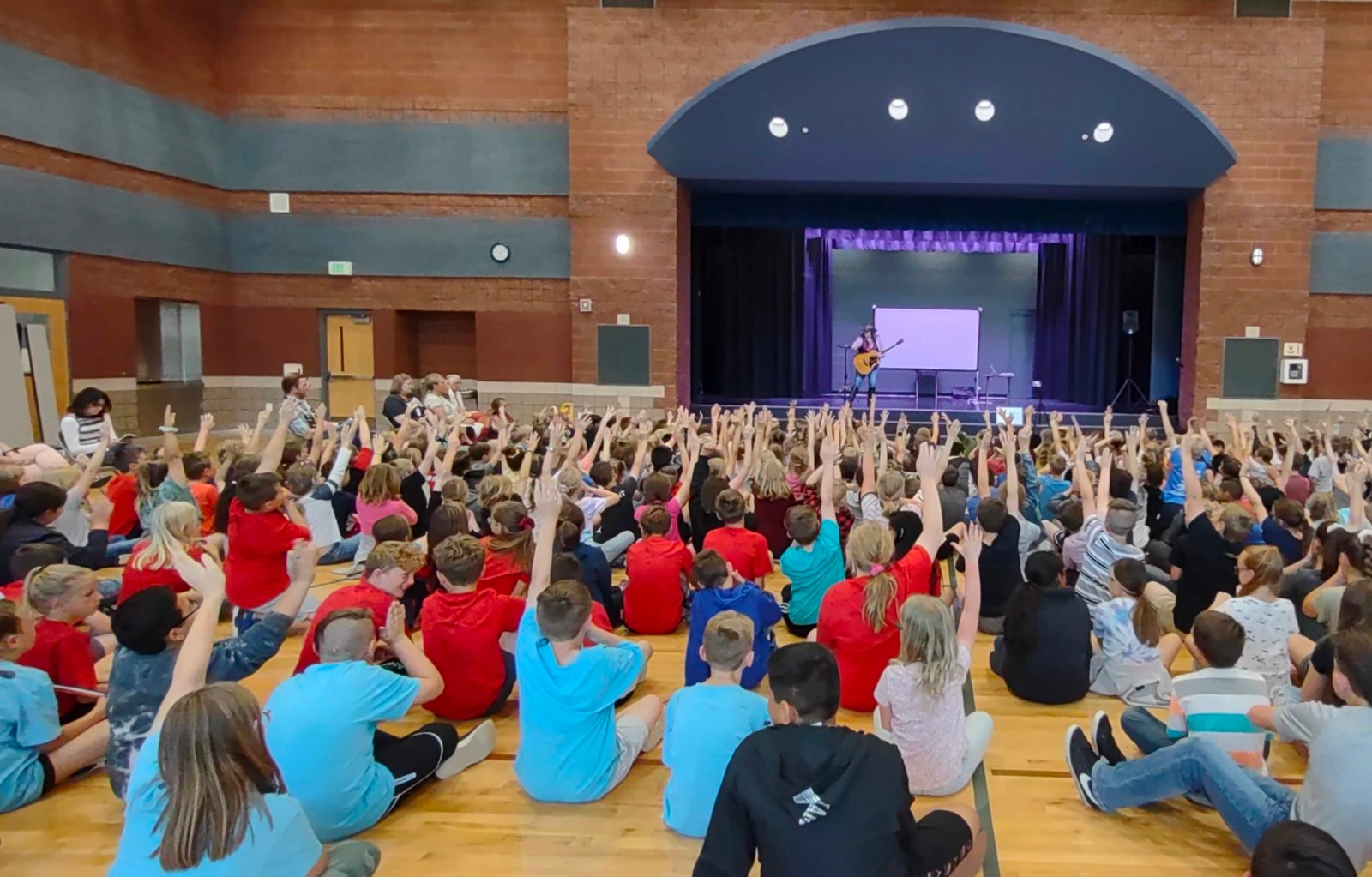
In the assembly, Kristen makes this transformation visible. Students help stick real sticky notes to her, each one a sticky story weighing her down, making her afraid to try, afraid to believe she measured up. Then she picks up her trick rope: her shiny story, made physical. As music plays, she dances with the rope, and one by one, the sticky notes fall away, not because she fought them, but because she was too busy moving with something true.
Then it's the students' turn, to name their own sticky stories, find their own shiny one, and decide what they're going to dance with.