I remember sitting on a gray gas meter, watching the school bus go by. Not just once. Year after year, day after day, feeling left out while everyone else's life kept moving forward without me.
Before all of that, I was just a kid living with my parents. Then they divorced, and I moved to a dairy farm in southeast Idaho. That's when things changed. Formal school stopped working for me after fifth grade, and I was left to teach myself, mostly out of a local library. I wasn't going to walk the halls with everyone my age anymore.
My grandma told me, every single day, that I could do anything I put my mind to, as long as I studied whatever I was passionate about. That single sentence, repeated over and over, counterbalanced the anxiety underneath all of it: the fear that I wasn't good enough, that I was falling behind everyone my age.
What I actually learned in that library wasn't one subject. It was how to learn. I developed a ferocious curiosity, and an attitude that has never left me since: there is always a way to solve a problem.
The breakthrough didn't happen when my circumstances changed. It happened when my internal standard did.
At my lowest point, staring at a life that felt completely broken, I made a decision that changed everything, though I didn't know it yet. I stopped asking "why is this happening to me" and started asking "what is this challenge trying to teach me." That single shift didn't fix anything overnight. But it turned every obstacle in front of me into material. Into curriculum. Into something I could actually use.
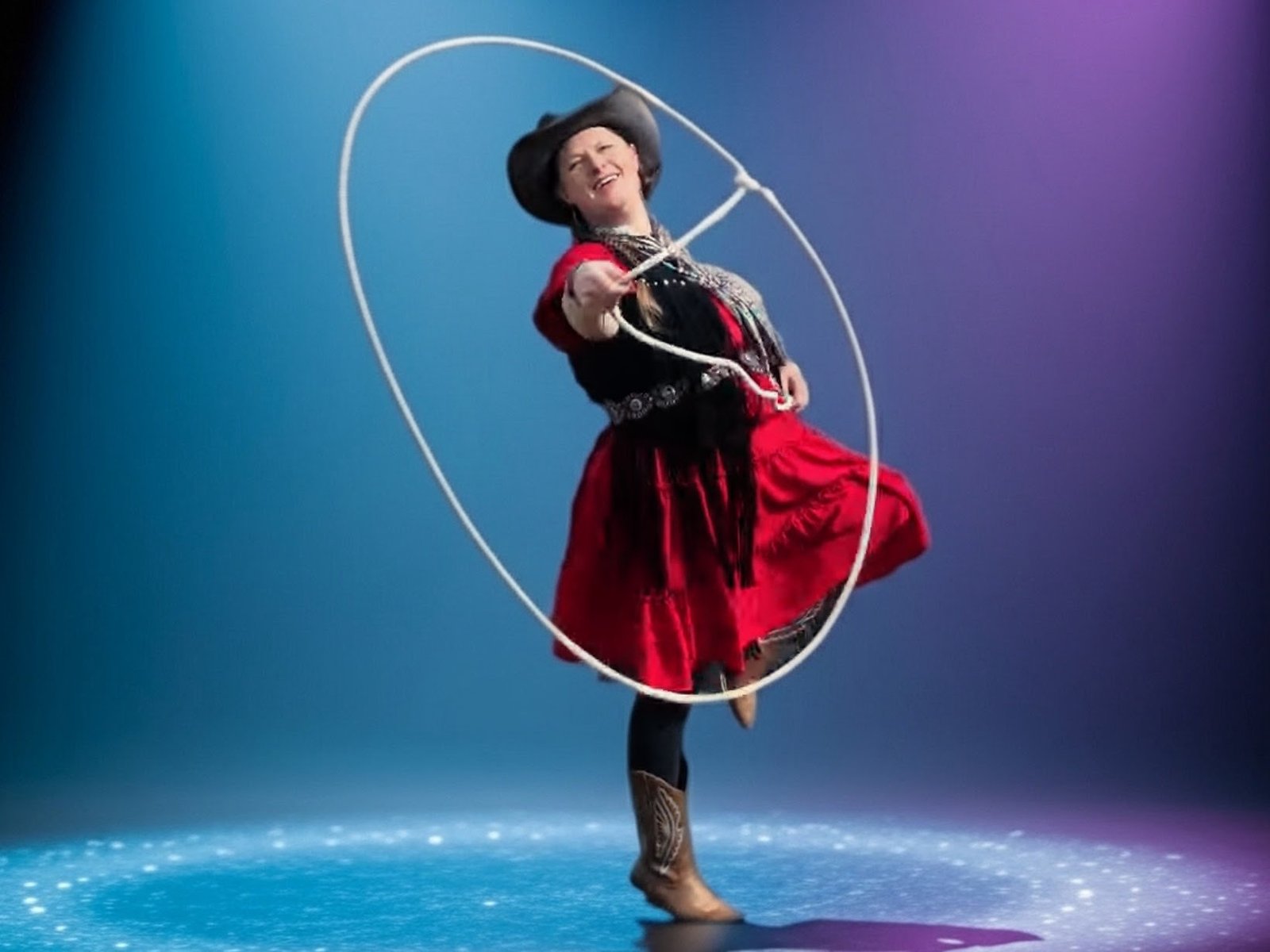
I learned to read a syllabus and teach myself a subject cover to cover. I learned to reverse-engineer my uncle's classical guitar compositions by ear because nobody was going to hand me sheet music. Years later, I spent a decade working as a theatrical train robber at Heber Valley Railroad in Northern Utah's Wasatch Back, cracking whips and roping strangers into a story, and somewhere in there I stopped viewing my strange path as something to apologize for. I finished a bachelor's degree in Commercial Music at BYU. I built a stage life out of a library education.
Here's what I want your audience to leave with. Not "wow, what a story." I want them to leave with the actual mechanism. The thinking process that got me from a gas meter to a stage, so they can use it the next time their own roadblock shows up. That's the difference between inspiration and a tool. I'm interested in giving people the tool, which is why I now travel as a resilience keynote speaker and provide western themed entertainment for events across Utah and beyond.
I can do tough. I can do different. I can do this.